Inspection and a clear scope
We identify where growth is present, what materials are affected (drywall, insulation, wood framing, carpet), and what moisture condition caused it so the plan addresses the root problem.
Serving Naperville, Illinois & surrounding areas
Mon–Fri 8am–6pm · Sat 9am–2pm
If you smell a musty odor, see staining, or have had a leak, the next step is a careful inspection, proper containment, and removal that does not spread spores to clean areas.
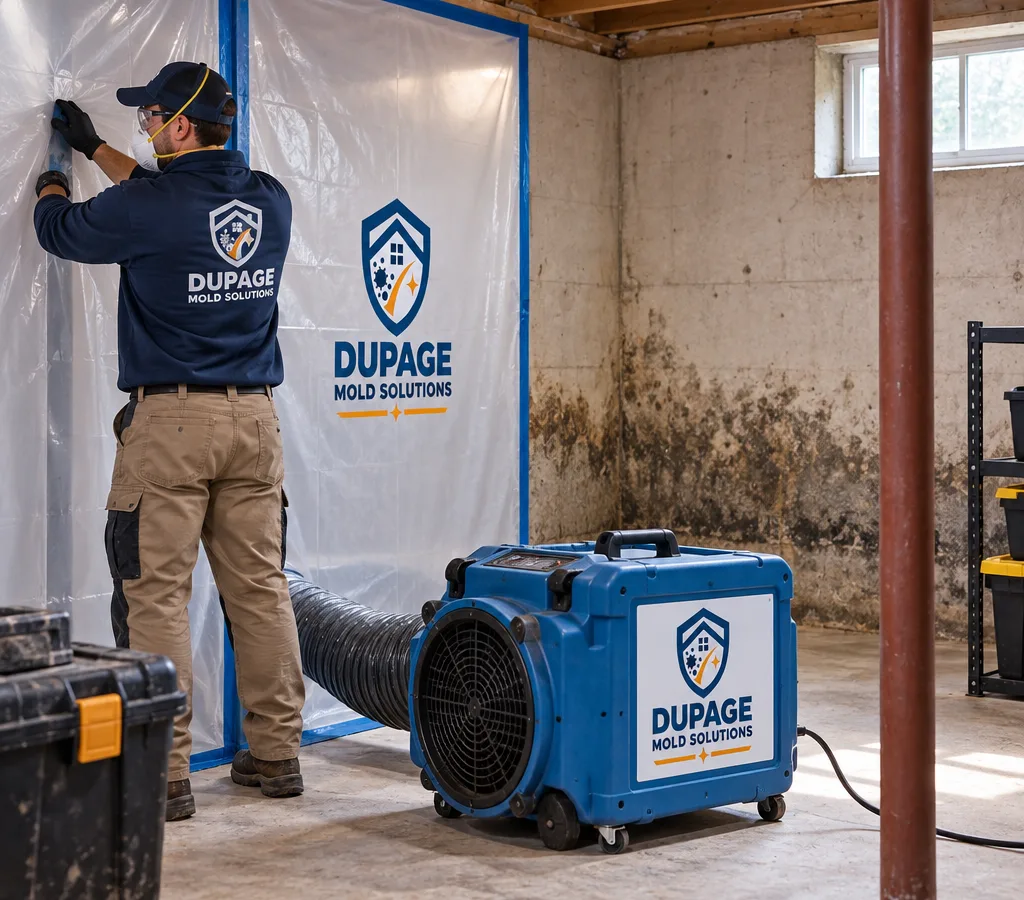
Mold remediation is controlled removal and cleanup, not a quick spray-and-wipe. The goal is to stop the source of moisture, prevent cross-contamination, remove mold growth and affected building materials when needed, and return the area to a clean, dry condition.
In Naperville homes, mold concerns often follow basement seepage, sump pump issues, wet drywall after a plumbing leak, or lingering humidity after storms. When materials stay damp, mold can grow out of sight behind baseboards, under carpet pads, or inside wall cavities.
The difference between a real remediation and a surface cleaning is containment. Disturbing mold without negative air pressure, HEPA filtration, and careful work practices can spread spores into adjacent rooms and HVAC returns. That is why DuPage Mold Solutions approaches each project with a plan: define the affected area, isolate it, clean correctly, and document what was done so you know the work was completed.
If you are comparing providers for mold removal in Naperville, ask how they keep air from the work zone from moving into clean parts of the home. The answer should include containment barriers, HEPA air scrubbers, and a step-by-step sequence for removing debris and cleaning remaining surfaces.
We identify where growth is present, what materials are affected (drywall, insulation, wood framing, carpet), and what moisture condition caused it so the plan addresses the root problem.
We isolate the work area with plastic barriers and run HEPA-filtered air scrubbers so cleanup stays in the affected zone instead of traveling through hallways and vents.
Porous materials that cannot be reliably cleaned, such as heavily impacted drywall or insulation, are removed, bagged, and handled carefully to reduce spore release.
We use HEPA vacuums on surfaces and follow with appropriate cleaning methods based on what the material is and how it is affected.
Remediation is incomplete if the area stays damp. We verify the area is drying, and we flag conditions that need correction, such as recurring seepage or poor ventilation.
You get practical guidance on what was found, what was removed, what can be rebuilt, and what steps help prevent a repeat issue.
Mold shows up in predictable places when water has had time to sit. In Naperville, we often respond to:
If you are in a neighborhood with many finished basements, the risk is not the finish work itself. The risk is when drywall, trim, and carpet cover a damp surface and the moisture source is not corrected. We focus first on finding and stopping the moisture pathway, then on remediation.
When you request an estimate, it helps to share what changed recently: a storm event, a supply line leak, a sump pump failure, or a bathroom exhaust issue. Those details shorten the troubleshooting time and lead to a tighter scope for mold remediation Naperville homeowners can rely on.
Book Your Free Inspection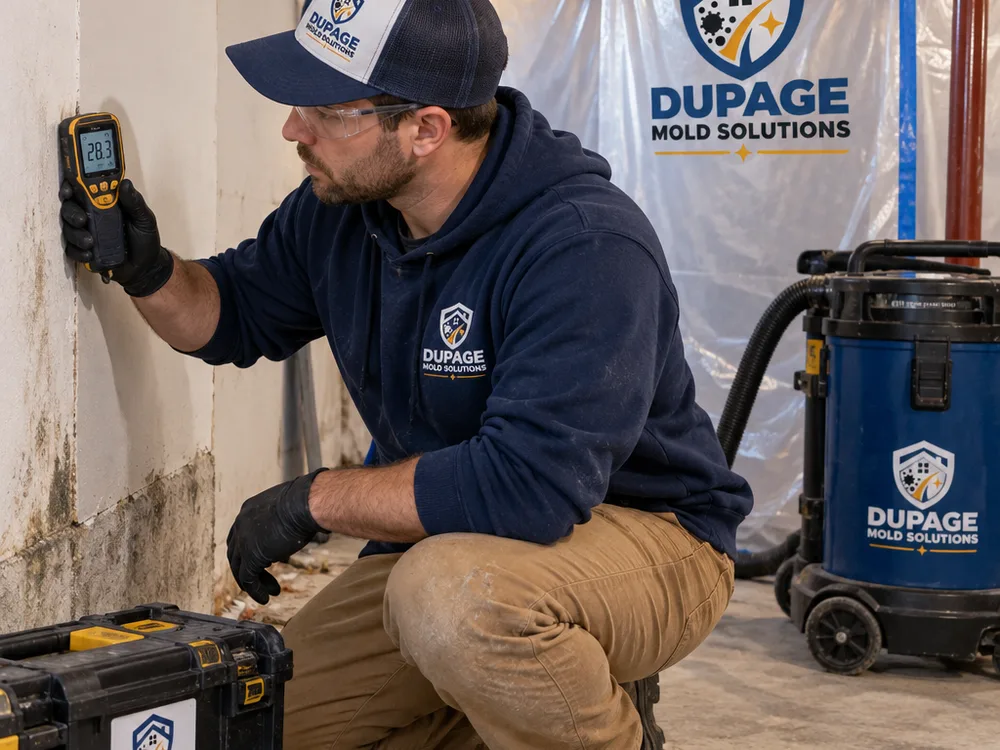
Step 1 of 4
We inspect the affected area, check likely moisture sources, and define what rooms or building cavities are involved so containment is sized correctly.
Step 2 of 4
We install poly barriers, establish negative air with HEPA filtration, and protect paths for safe entry/exit and debris handling.
Step 3 of 4
We remove materials that cannot be cleaned, then HEPA vacuum and clean framing and hard surfaces using methods appropriate to the substrate and condition.
Step 4 of 4
We confirm the area is drying and advise on fixes needed to prevent recurrence. If rebuild is planned, the space is left ready for restoration work.
Mold remediation in Naperville typically ranges from about $1,200 to $6,500+, with small, contained areas near the low end and multi-room or hidden, wall-cavity contamination toward the high end. A limited bathroom or closet cleanup may fall around $1,200 to $2,500, while a basement project with drywall removal, containment, and drying often lands around $3,000 to $6,500+.
Final pricing depends on how far the mold has spread, what materials must be removed (drywall, insulation, carpet), access and debris handling, and the drying time needed after the moisture source is addressed. The exact cost is confirmed after an on-site inspection and written scope.
“We had a musty smell in the basement that kept coming back. The team contained the area properly, removed the affected drywall, and explained what was causing the moisture. The house stayed clean during the work and the odor is gone.”
“After a small plumbing leak, we worried the mold had spread behind the cabinets. They walked us through what was affected, what needed to be removed, and what didn't. The scope was clear and the work was tidy.”
Most mold remediation projects take 1 to 3 days of on-site work, then additional drying time if materials are still wet. A small, isolated area can sometimes be completed in a day, while a basement or multi-room project with removal and drying often takes longer because containment, debris handling, and verification steps cannot be rushed.
Sometimes, yes, but only when the mold is limited to cleanable surfaces and the drywall and insulation are not impacted. If growth is inside the wall cavity or the drywall has been wet and contaminated, removal is usually the reliable option because porous materials are difficult to clean all the way through.
In many cases it is safe to stay home if the affected area is fully contained and access is controlled, but it depends on where the work is and who lives in the home. Homes with infants, elderly residents, or people with asthma or immune concerns may choose to avoid the work area entirely or stay elsewhere during active removal.
Yes. Basements are a common source of mold remediation calls in Naperville because moisture can enter around foundation edges, window wells, or through humidity in finished spaces. Crawl spaces also require careful containment and protective equipment because airflow is limited and disturbed debris can spread quickly.
Bleach can lighten staining on some surfaces, but it is not a reliable mold remediation method for porous materials like wood because it does not penetrate well and the moisture can make conditions worse. A proper approach uses containment, HEPA filtration, physical removal where needed, and cleaning methods matched to the material.
Keep the area as undisturbed as possible and avoid running fans that blow air from the affected room into clean areas. If you can, clear a path to the work zone and note any recent leaks, overflows, or storm water events. Those details help us focus the inspection and build a tighter scope for mold remediation in Naperville.
Tell us what you are seeing and where it is happening. We will schedule an inspection, explain the containment and removal approach, and provide a written scope so you can move forward with confidence.