Inspection that follows building science
We look for water entry, condensation, and HVAC or ventilation issues first, because mold is a symptom of moisture. You will get a clear explanation of what we see and why it matters.
Serving Naperville, Illinois & surrounding areas
Mon–Fri 8am–6pm · Sat 9am–2pm
Get clear answers fast with professional sampling, accredited lab analysis, and a straightforward plan for what to do next.
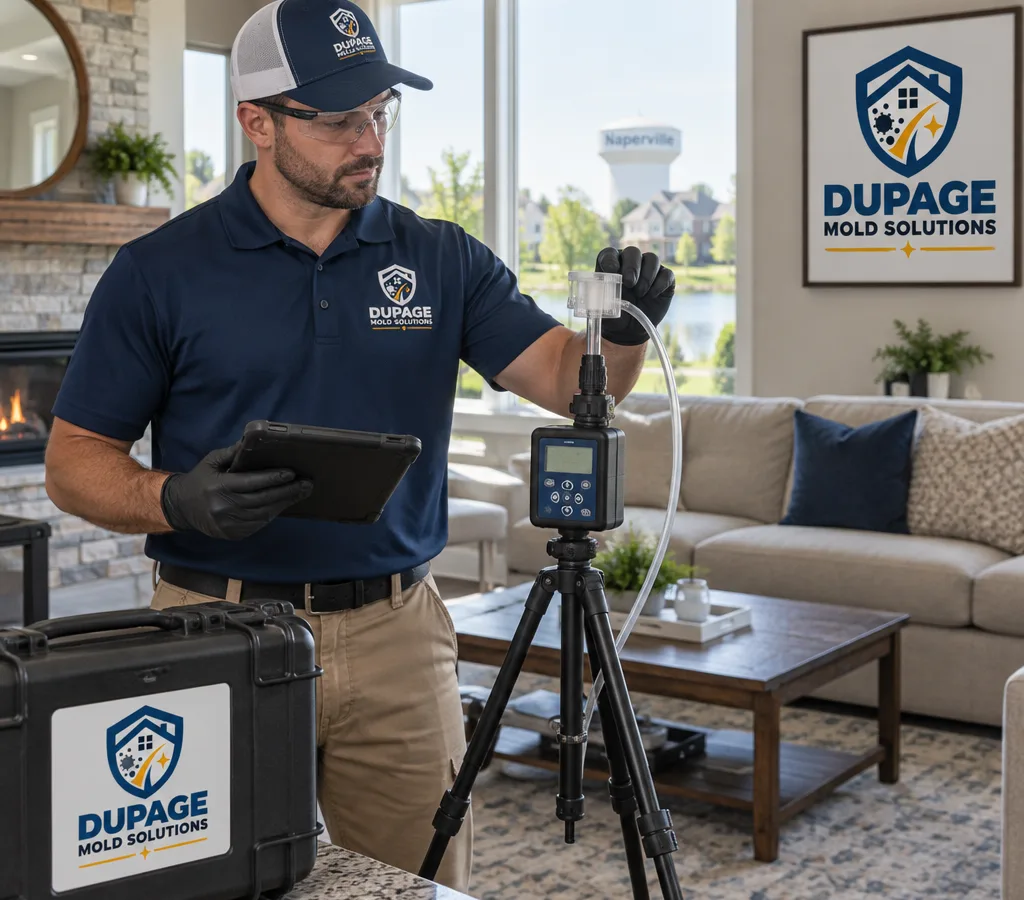
If you are searching for mold testing Naperville homeowners rely on, you are probably dealing with one of the classic triggers: a basement that smells musty after rain, a leak that was fixed but never fully dried, staining around a supply vent, or allergy symptoms that seem worse indoors. Mold can be visible, hidden, or disturbed by everyday airflow.
DuPage Mold Solutions focuses on inspection and sampling that answers three practical questions: Where is the moisture coming from, what areas are likely affected, and what does the lab report mean for cleanup. The goal is not to create alarm. It is to give you defensible information you can use before spending money on demolition, removal, or repairs.
In Naperville, a lot of mold concerns start in lower levels. Finished basements, sump pits, and storage rooms can stay humid for long stretches, and small seepage events can go unnoticed behind baseboards or under flooring. Testing is most helpful when it is paired with a careful walkthrough that looks for the moisture conditions that let mold grow in the first place.
We look for water entry, condensation, and HVAC or ventilation issues first, because mold is a symptom of moisture. You will get a clear explanation of what we see and why it matters.
We recommend samples that match the situation: air samples for suspected airborne spore issues, surface or tape samples for visible growth, and swabs when confirmation is needed.
Samples go to a qualified lab, and we translate the report into plain next steps. You will understand what was found, where, and what to do about it.
If you are working with a landlord, a buyer or seller, or an insurance claim, we can provide written findings and sampling locations to support decisions and scope.
Testing should lead somewhere. We explain when professional remediation is warranted, what containment should look like, and what a reasonable cleanup plan includes.
A good mold test starts with the building, not the pump. During the inspection, we check common risk areas such as basement rim joists, behind stored items against foundation walls, under sinks, around windows with repeated condensation, and near HVAC components where condensation can form.
Then we decide on the right sampling plan.
Air sampling can help when symptoms are the main complaint, when there is a musty odor without obvious growth, or when you need to compare a suspect area to a control sample. Surface sampling is often better when you have visible staining and need to confirm whether it is mold or something else.
We also talk through practical constraints that affect results. For example, recent cleaning, heavy airflow from fans, or windows left open can change indoor spore levels. If you are preparing for testing, we will tell you what to do—and what not to do—so the lab report is meaningful.
If you are trying to figure out whether you need removal as well, start with a clear diagnosis. Many clients pair testing with a plan for mold removal in Naperville once the source and extent are confirmed.
Book Your Free Inspection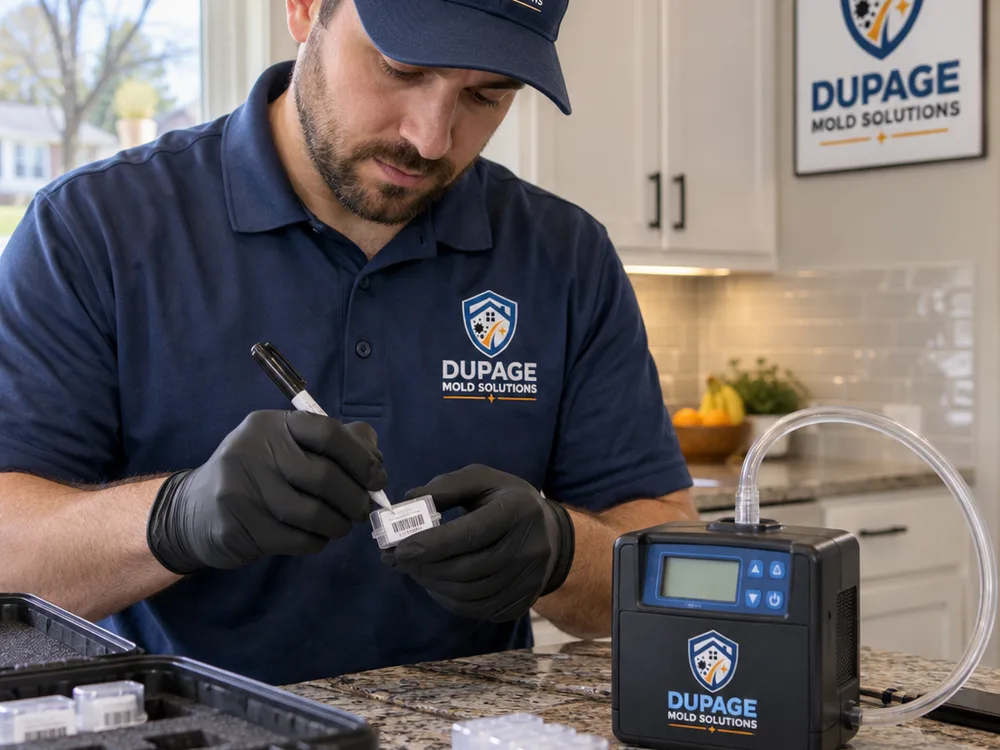
Step 1 of 5
We start by learning what prompted the concern: odor, visible growth, a past leak, recent construction, a real estate timeline, or health complaints. This determines the right sampling strategy.
Step 2 of 5
We inspect the areas you are worried about and the adjacent spaces where moisture travels. We look for staining, warping, efflorescence, condensation patterns, and ventilation problems.
Step 3 of 5
We collect only the samples that answer your questions. Common options include indoor air samples, an outdoor baseline sample, and surface samples from suspicious materials.
Step 4 of 5
Your samples are analyzed by a lab, and we review the results with you. You will know what was detected, how it compares room-to-room, and what that suggests about hidden growth or disturbed spores.
Step 5 of 5
We outline what should happen next: moisture correction, targeted opening of suspect cavities, professional remediation scope, or a simple watch-and-dry plan when the evidence does not support a larger project.
Mold testing in Naperville typically ranges from about $300 to $850, depending on the size of the home and the number and type of samples collected. A basic inspection with 1 to 2 air samples is usually on the lower end, while larger homes, more rooms, or a mix of air and surface sampling can push pricing higher.
Your final cost depends on sampling count, accessibility such as attics, crawlspaces, and finished basements, how targeted the inspection needs to be after a leak, and lab turnaround. The exact price is confirmed after we review the areas of concern and confirm the sampling plan on site.
“We had a musty smell in the basement and didn't want to start tearing things out. The inspection was thorough, the sampling was explained clearly, and the lab report came back with practical next steps we could act on.”
“The results review was the best part. I finally understood what the numbers meant and which room was driving the issue. It helped us plan the right scope instead of guessing.”
Most appointments can be scheduled quickly, and timing depends on current demand and whether you need testing tied to a real estate deadline. If you are dealing with an active leak or recent water damage, testing is often best after drying has begun, so the sampling reflects current conditions instead of a one-day spike.
If you have clear, active-looking growth on building materials, you may not need testing to justify cleanup, but testing can still help define the extent and guide the scope. It is especially useful when you are unsure whether staining is mold, when multiple areas are involved, or when you want documentation for a buyer, seller, landlord, or insurer.
Air testing can suggest that spores are being released in a specific area, but it does not pinpoint the exact cavity or material by itself. The most reliable approach is an inspection that follows moisture clues, then uses air and surface sampling to confirm likely sources before any invasive opening.
In most cases, you can stay home during testing because sampling is non-destructive and brief. If you have severe sensitivities or the inspection involves entering a heavily contaminated area, we can discuss precautions and the best way to keep the rest of the home from being disturbed during the visit.
For more meaningful results, avoid running air purifiers on high right before sampling, and avoid heavy cleaning or spraying chemicals in the areas being tested. Keep windows and exterior doors closed for a reasonable period before sampling when possible, and tell us about any recent work, leaks, or cleaning so we can interpret the lab report correctly.
Yes. After results are in, we explain what they indicate, what to fix first—usually moisture—and what a reasonable remediation plan should include for containment and material removal when needed. If you move forward with professional cleanup, we can help you understand what to expect and how to avoid cross-contamination during the work.
Tell us what you are seeing or smelling and where it is happening. We will recommend a sampling plan that fits the situation and walk you through the lab results and next steps.